2025.
Theory of the Earth.jpg
A particle in my pocket is speaking with a
satellite in our stratosphere, letting me, a human, know that I am here upon
this earth.
A cliff, formed 70 million years ago, is captured by a camera and uploaded to a data center halfway around the world in a fraction of a second. The image will live there in perpetuity, while the cliffs will continue to weather and change.
The accumulation of a molecule released in service of our runs to the grocery store, blasts of AC, and new city blocks changes the way heat leaves our earth, causing the extinction of a mosaic tailed rat as its island disappeared under the rising waters.
What does it mean to be a part of earth at this moment in time?
This project, Theory of the Earth, examines this question through pebbles. The pebbles, found on the ground, contain stories and timeframes that dwarf humanity, and yet they are also just pebbles that we walk on.
![]()
A cliff, formed 70 million years ago, is captured by a camera and uploaded to a data center halfway around the world in a fraction of a second. The image will live there in perpetuity, while the cliffs will continue to weather and change.
The accumulation of a molecule released in service of our runs to the grocery store, blasts of AC, and new city blocks changes the way heat leaves our earth, causing the extinction of a mosaic tailed rat as its island disappeared under the rising waters.
What does it mean to be a part of earth at this moment in time?
This project, Theory of the Earth, examines this question through pebbles. The pebbles, found on the ground, contain stories and timeframes that dwarf humanity, and yet they are also just pebbles that we walk on.
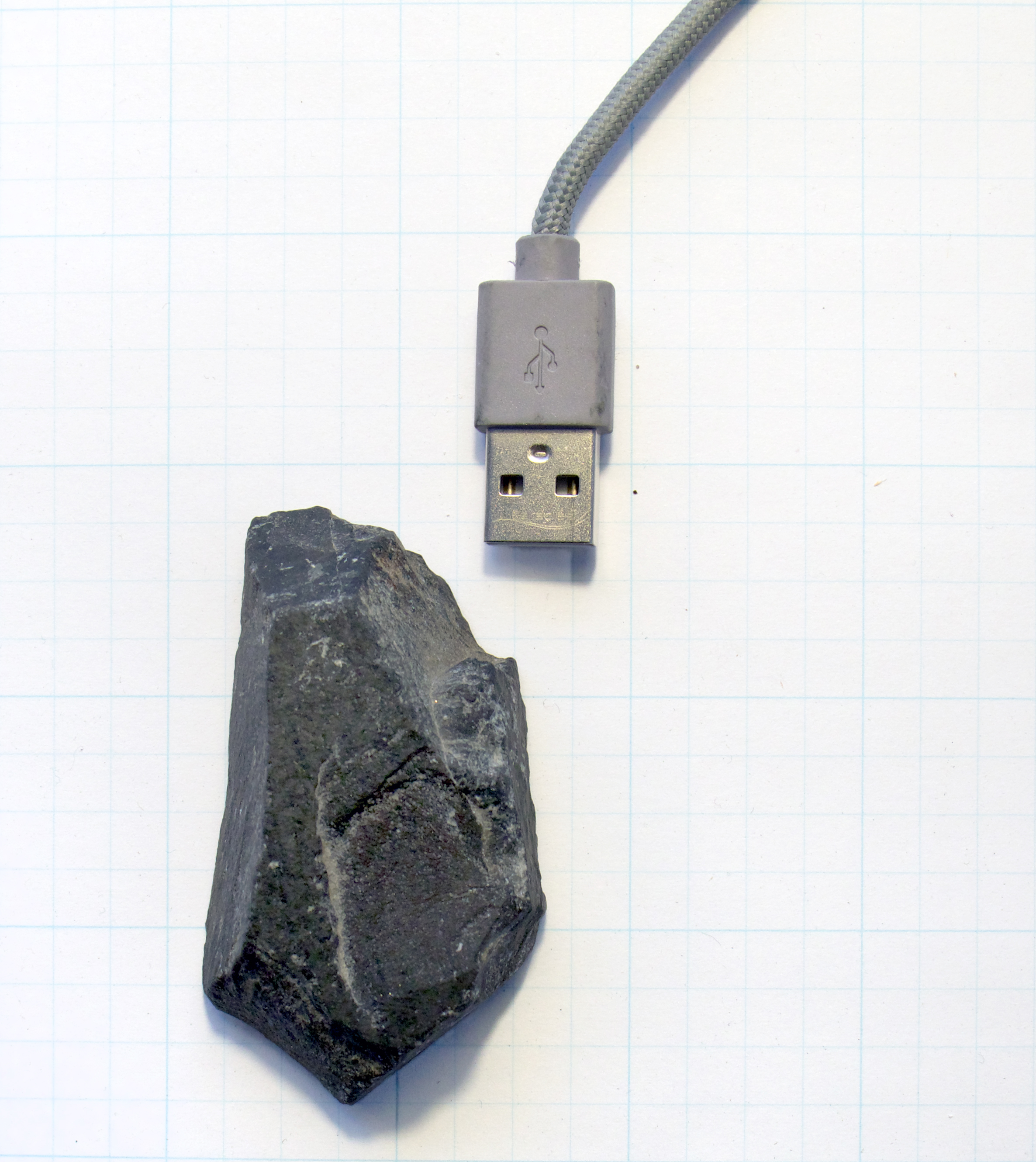

This work is deeply inspired by Joshua DiCaglio’s Scale Theory: A Nondisciplinary Inquiry. As he puts it so eloquently:
“How is it possible that you are—simultaneously—cells, atoms, a body, quarks, a component in an ecological network, a moment in the thermodynamic dispersal of the sun, and an element in the gravitational whirl of galaxies?”
“How is it possible that you are—simultaneously—cells, atoms, a body, quarks, a component in an ecological network, a moment in the thermodynamic dispersal of the sun, and an element in the gravitational whirl of galaxies?”
