2025.
Sidewalk Erratics
Through cutting, blasting, drilling, and digging, humans now move more than thirty billions tons of earth each year - a restless rearranging of the planet’s surface that rivals rivers, glaciers, waves, and wind. Mountains are quarried into cities; riverbeds become foundations; stone travels farther in a single human lifetime than it once did in millennia. Our cities, the terminal moraines of our time, are dense geological accumulations built from distant quarries, river valleys, and ancient seabeds. They are landscapes of assembly, where deep time is pulverized, transported, and paved into the everyday.
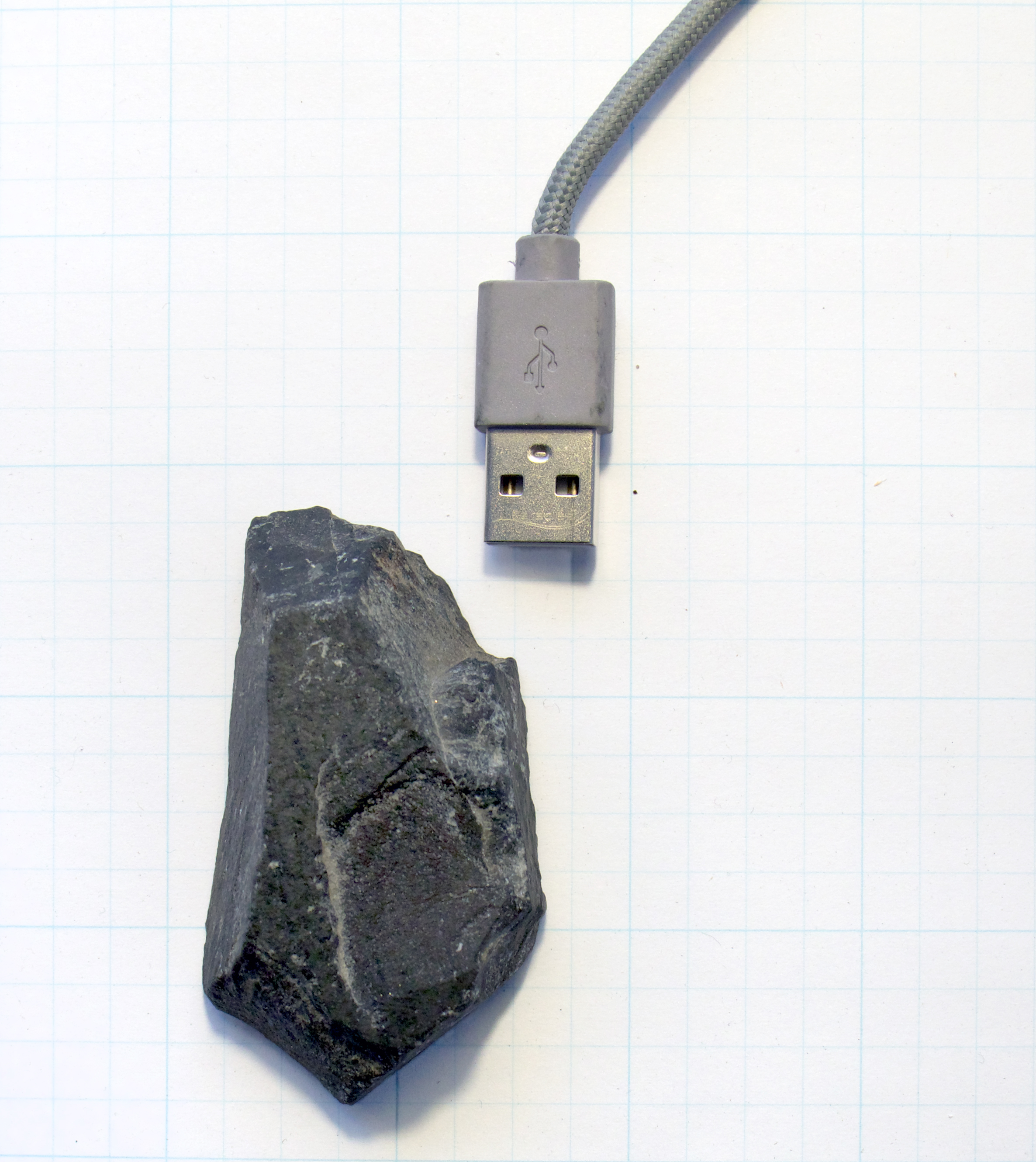
This project explores this vast reorganization of matter through an intimate scale: large graphite drawings of small pebbles found on the streets of New York City. These stones - found at the edges of our roads and sidewalks - are residual fragments of immense extractive forces. Yet in drawing them, I am not attempting to catalogue extraction. Instead, by slowly enlarging and rendering each pebble, I invite a shift in perception.
Against the incomprehensible span of geological time, the two weeks it takes to complete a drawing register as brief. And yet, it is precisely within this imbalance that meaning emerges. The drawings acknowledge that while I cannot comprehend deep time in its entirety, I can choose how I attend to its remnants. In this way, symbols of extraction and displacement are reimagined as sites of reflection.
This work is deeply inspired by Joshua DiCaglio’s Scale Theory: A Nondisciplinary Inquiry.
![]()
This project explores this vast reorganization of matter through an intimate scale: large graphite drawings of small pebbles found on the streets of New York City. These stones - found at the edges of our roads and sidewalks - are residual fragments of immense extractive forces. Yet in drawing them, I am not attempting to catalogue extraction. Instead, by slowly enlarging and rendering each pebble, I invite a shift in perception.
Against the incomprehensible span of geological time, the two weeks it takes to complete a drawing register as brief. And yet, it is precisely within this imbalance that meaning emerges. The drawings acknowledge that while I cannot comprehend deep time in its entirety, I can choose how I attend to its remnants. In this way, symbols of extraction and displacement are reimagined as sites of reflection.
This work is deeply inspired by Joshua DiCaglio’s Scale Theory: A Nondisciplinary Inquiry.